
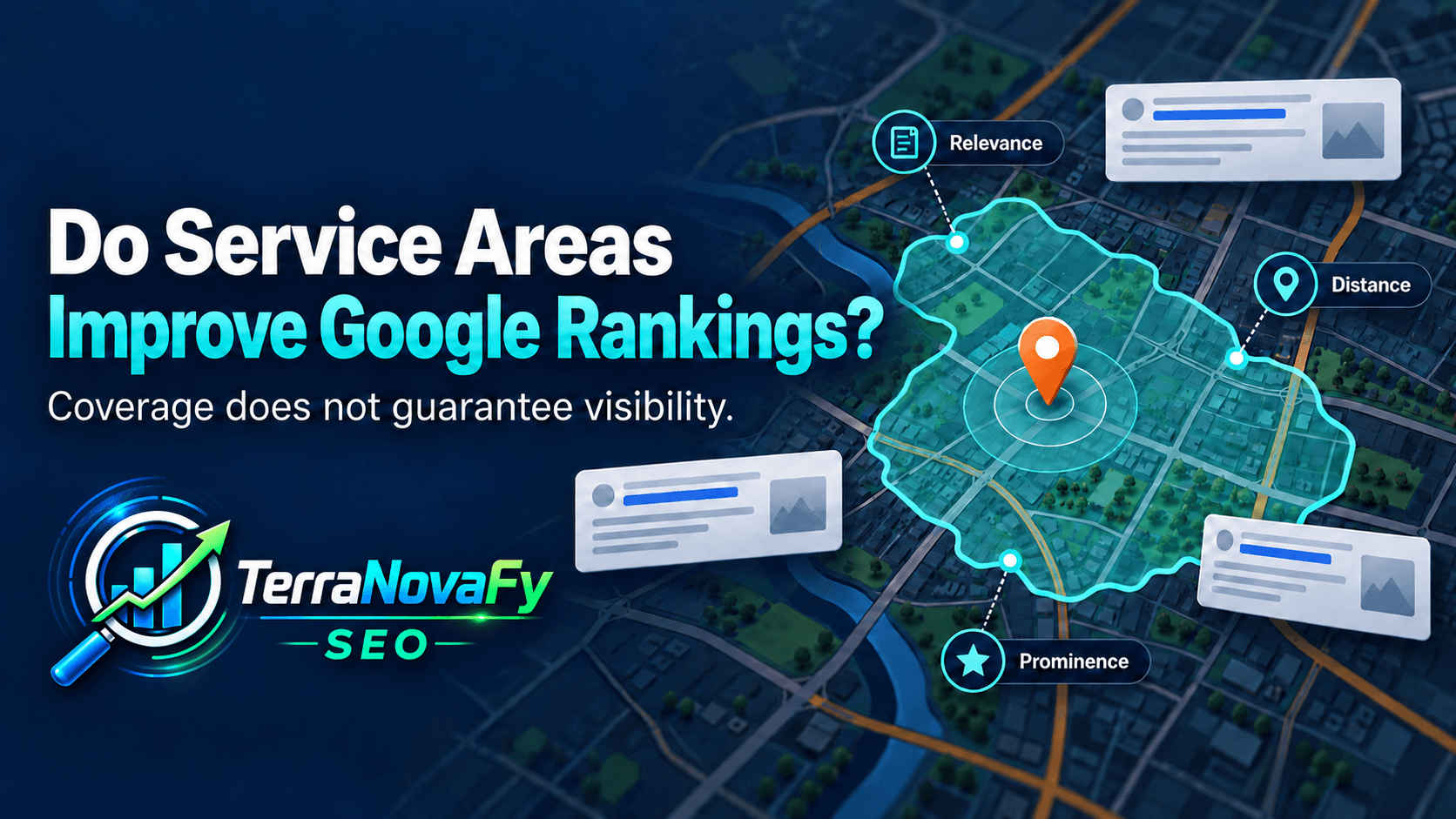
Google Business Profile service areas tell customers where your company provides service. Adding a city does not guarantee that your business will rank there. Google’s local ranking system also considers relevance, distance, and prominence.
For example an HVAC business, choose service areas that reflect where your team actually preforms AC repair. Treat them as customer information rather than a way to secure placement across a larger region.
What Google Business Profile service areas do
Service areas help customers understand whether you can visit their property. Google allows eligible businesses to identify coverage through cities, postal codes, or other supported areas.
Google currently allows up to 20 service areas. Its guidance says the overall coverage boundary generally should stay within about two hours of driving time from your business base. Review Google’s service-area instructions when updating your profile.
If you do not serve customers at your business address, remove that address from public display on your profile and use your service area. Your profile should describe how customers actually receive service.
Adding cities to your Google Business Profile service areas does not guarantee visibility.
Google explains that distance remains one of the main factors in local rankings. A service-area entry does not create another business location.
For example, a hypothetical contractor based in Orlando Florida might also serve nearby communities. Listing those communities communicates coverage. It does not establish an office in each one or promise the same ranking across every search location.
Google’s local ranking guidance also identifies relevance and prominence. Therefore, review your business information and reputation alongside the places you serve.
How should you choose your coverage?
Start with your actual scheduling limits. Consider drive time, appointment availability, and the services you can support in each area.
If your team handles installations in a wider territory than urgent repairs, explain that distinction on your website. Customers need to know whether your coverage matches the work they need.
Review the list when staffing or routes change. Accurate coverage helps your team spend less time responding to requests it cannot accept.
What should you improve next?
Check that your profile points to a useful website. Your service pages should explain what you offer, where you work, and how to request an appointment.
Then review the inquiries you receive. Which locations produce suitable work? Where do you lose opportunities because of travel or availability? Use those answers to guide your coverage and website content.
Visit TerraNovaFy to discuss how your business profile and website can support your local SEO goals.